

lbanner
0%

Table of Contents

The global demand for reliable and safe protective gear has fueled significant growth in the vinyl glove factory industry. These factories are pivotal in supplying essential personal protective equipment (PPE) across diverse sectors, including healthcare, food processing, cleaning services, and industrial manufacturing. A robust vinyl glove factory infrastructure is crucial not only for economic stability but also for public health and safety, especially highlighted during global health crises. Understanding the nuances of this industry – from raw material sourcing to manufacturing processes and quality control – is vital for stakeholders seeking efficiency, cost-effectiveness, and responsible production.

The rise of the vinyl glove factory sector reflects a growing awareness of the importance of hygiene and infection control. Global standards, such as those set by the ISO and regulatory bodies like the FDA, play a critical role in ensuring product quality and safety. Competition within the industry is fierce, driving innovation in manufacturing techniques and materials. The ability of a vinyl glove factory to adapt to evolving demands – including specialized glove types and sustainable practices – determines its long-term success and contribution to global supply chains.

The vinyl glove factory industry’s future is inextricably linked to advancements in materials science, automation, and supply chain resilience. Increased emphasis on environmental responsibility and worker safety is shaping the direction of development within the sector. Successfully navigating these challenges requires a commitment to continuous improvement and a focus on delivering high-quality products that meet the evolving needs of a global marketplace.

vinyl glove factory

The Global Significance of Vinyl Glove Factories
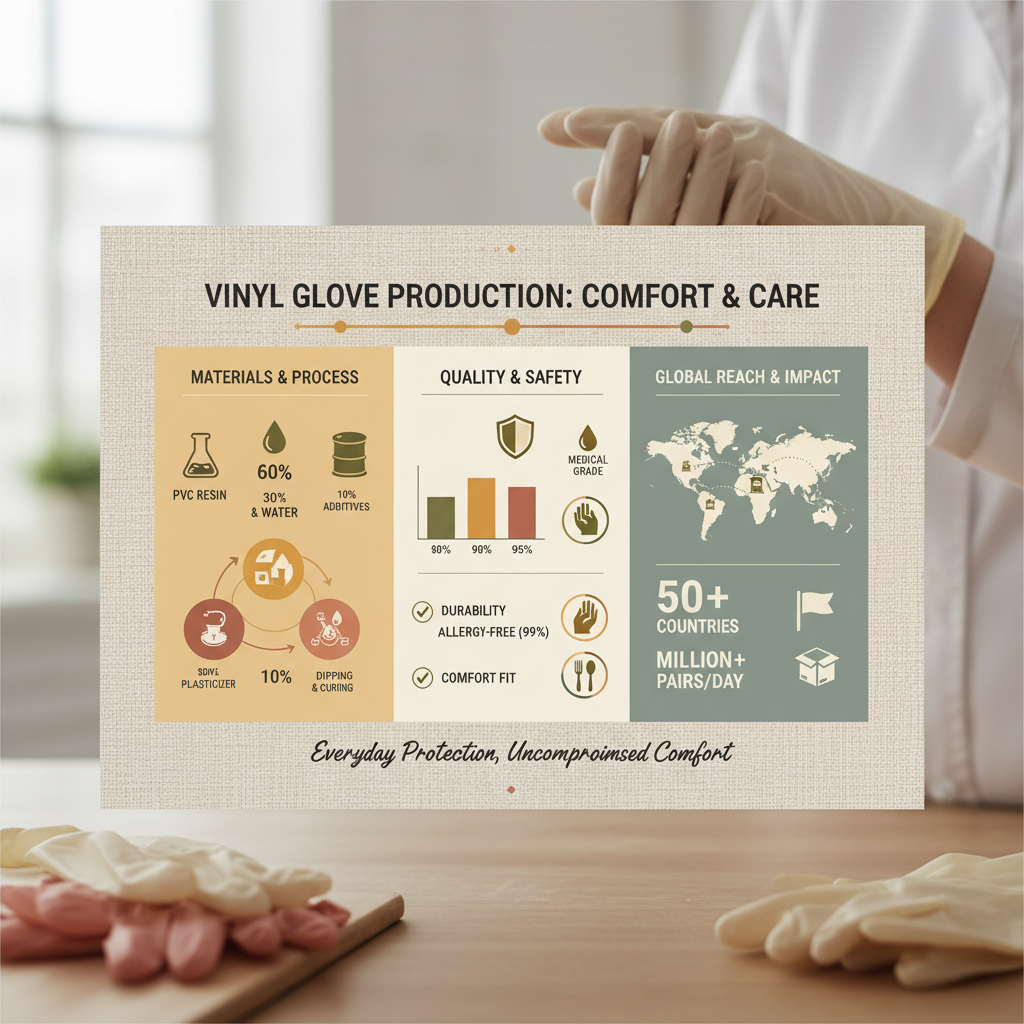
vinyl glove factory

Vinyl glove factories are indispensable components of the global healthcare and hygiene infrastructure. The COVID-19 pandemic dramatically underscored the critical role these factories play in providing essential PPE to frontline workers and the general public. According to the World Health Organization (WHO), demand for gloves surged exponentially during the pandemic, placing immense pressure on vinyl glove factory production capacity worldwide. The need for a stable and responsive supply chain became paramount, highlighting the importance of geographically diverse and robust manufacturing capabilities.

Beyond healthcare, industries like food processing, sanitation, and manufacturing rely heavily on vinyl gloves to maintain hygiene standards and ensure product safety. The United Nations Sustainable Development Goals (SDGs), particularly those related to health and well-being, are directly impacted by the availability of affordable and reliable protective gear produced by vinyl glove factories. A thriving vinyl glove factory sector contributes to economic growth in producing countries and safeguards public health globally.

Defining the Vinyl Glove Factory

A vinyl glove factory is a manufacturing facility dedicated to the production of gloves made from polyvinyl chloride (PVC) – commonly known as vinyl. These factories encompass a complex series of processes, starting with the sourcing of PVC resin and additives, then moving through compounding, extrusion, coating, curing, and finally, quality control and packaging. The term “vinyl glove factory” broadly refers to facilities ranging from small-scale operations to large, automated production plants capable of producing millions of gloves per month.

The primary function of a vinyl glove factory is to transform raw materials into a finished product that provides a protective barrier against contaminants, pathogens, and chemicals. Modern vinyl glove factories often incorporate sophisticated technologies to ensure consistency in quality, thickness, and tensile strength. They adhere to rigorous safety standards to protect workers and minimize environmental impact.

In the context of modern industry and humanitarian needs, the role of a vinyl glove factory extends beyond simply manufacturing a product. They are key players in public health initiatives, infection control protocols, and maintaining safe working conditions across a diverse range of industries. A well-managed vinyl glove factory actively contributes to a more secure and hygienic world.

Core Components of a Vinyl Glove Factory

A successful vinyl glove factory relies on several core components. First, efficient raw material procurement is essential, including consistent access to high-quality PVC resin, plasticizers, and other additives. Second, advanced extrusion technology is crucial for producing gloves with uniform thickness and dimensions. Third, a robust quality control system, encompassing testing for tensile strength, elongation, and leak detection, ensures products meet industry standards.

Fourth, skilled labor is needed to operate and maintain the complex machinery involved in glove production. Fifth, effective inventory management and logistics are vital for timely delivery to customers. Sixth, adherence to stringent safety protocols and environmental regulations is non-negotiable, safeguarding both workers and the surrounding community. Each of these components directly impacts the efficiency, quality, and sustainability of the vinyl glove factory.

The integration of these components creates a synergistic effect, enabling the vinyl glove factory to produce high-quality gloves at a competitive cost. Continual investment in technology and workforce training is critical for maintaining a competitive edge and adapting to evolving industry demands. A strategically managed vinyl glove factory isn't merely a production facility; it's a carefully orchestrated system optimized for efficiency and reliability.

Key Operational Factors in Vinyl Glove Production

Several operational factors significantly impact the performance of a vinyl glove factory. The selection of the appropriate PVC formulation is paramount, influencing glove flexibility, durability, and chemical resistance. The extrusion process, including temperature control and die design, directly affects glove thickness and consistency. Maintaining optimal curing conditions is essential for achieving the desired strength and elasticity.

Effective quality control procedures are non-negotiable, involving rigorous testing at various stages of production. This includes testing for tensile strength, elongation, leak detection, and powder residue levels. Minimizing waste through efficient material usage and recycling programs is crucial for both cost reduction and environmental sustainability. A streamlined production process, coupled with skilled labor and meticulous quality control, is the foundation of a successful vinyl glove factory.

Vinyl Glove Factory Production Efficiency Metrics

Global Applications of Vinyl Gloves

Vinyl gloves find widespread application across a multitude of industries. In healthcare settings, they are used for patient examination, diagnostics, and routine procedures, providing a critical barrier against the transmission of infections. The food processing industry relies on vinyl gloves to maintain hygiene standards during food handling and packaging.

Cleaning services utilize vinyl gloves for protection against harsh chemicals and detergents, safeguarding the health of cleaning personnel. Industrial applications, such as automotive manufacturing and electronics assembly, employ vinyl gloves to protect sensitive components from contamination. In post-disaster relief operations, vinyl gloves are essential for providing sanitary assistance and preventing the spread of disease.

Advantages and Long-Term Value

Vinyl gloves offer several advantages, including cost-effectiveness, making them an accessible option for many applications. They provide a reasonable level of protection against a wide range of chemicals and biological hazards. Their relative simplicity in manufacturing contributes to faster production times and lower overall costs compared to some alternative materials.

The long-term value of a reliable vinyl glove supply chain lies in its contribution to public health, workplace safety, and economic stability. Investing in sustainable manufacturing practices and worker training enhances the reputation and long-term viability of vinyl glove factories, building trust with customers and stakeholders.

Future Trends and Challenges in Vinyl Glove Manufacturing

The future of vinyl glove manufacturing will be shaped by several emerging trends. Increasing demand for sustainable materials is driving research into bio-based PVC alternatives and improved recycling technologies. Automation and robotics are poised to enhance production efficiency and reduce labor costs. Digitalization and data analytics will enable better quality control, predictive maintenance, and supply chain optimization.

One significant challenge facing the industry is the environmental impact of PVC production and disposal. Developing closed-loop recycling systems and reducing reliance on fossil fuels are crucial steps towards sustainability. Another challenge is addressing worker safety concerns related to exposure to PVC additives. Investing in advanced ventilation systems and protective equipment is essential for safeguarding the health of factory personnel.

Adapting to evolving regulatory requirements and maintaining competitive pricing in a global market will also be critical for the long-term success of vinyl glove factories. A proactive approach to innovation and sustainability will be key to navigating these challenges and capitalizing on future opportunities.

A Comparative Analysis of Vinyl Glove Factory Performance

Factory Location Production Capacity (Gloves/Month) Quality Control Rating (1-10) Sustainability Index (1-10)
Malaysia 5,000,000 8.5 6.0
China 8,000,000 7.8 5.5
Thailand 3,500,000 9.0 7.0
India 6,000,000 7.2 4.8
Vietnam 4,200,000 8.0 6.5
Indonesia 2,800,000 7.5 5.2

FAQS

What are the key quality standards that vinyl glove factories must adhere to?

Vinyl glove factories must comply with a range of international and national quality standards, including ISO 9001 for quality management systems, ASTM D5151 for glove tensile properties, and EN 374 for chemical resistance. Regulatory bodies like the FDA also set specific requirements for gloves used in medical applications. Adherence to these standards ensures product safety, consistency, and performance, protecting both end-users and the reputation of the factory.

How does automation impact the efficiency of vinyl glove factories?

Automation significantly enhances the efficiency of vinyl glove factories by streamlining production processes, reducing labor costs, and improving product consistency. Automated extrusion lines, coating systems, and packaging machines increase output while minimizing human error. Furthermore, automated quality control systems can quickly identify and reject defective gloves, ensuring higher product quality and reducing waste. Investing in automation is essential for vinyl glove factories to remain competitive in the global market.

What are the environmental challenges associated with vinyl glove production?

Vinyl glove production faces several environmental challenges, primarily related to the use of PVC, a plastic derived from fossil fuels. The manufacturing process can generate emissions of volatile organic compounds (VOCs) and require significant energy consumption. Waste disposal of PVC gloves is also a concern, as they are not readily biodegradable. Addressing these challenges requires adopting sustainable manufacturing practices, investing in recycling technologies, and exploring bio-based alternatives to PVC.

How can vinyl glove factories improve worker safety?

Improving worker safety in vinyl glove factories requires implementing comprehensive safety protocols and providing appropriate protective equipment. This includes ensuring adequate ventilation to minimize exposure to chemical fumes, providing gloves, masks, and eye protection, and conducting regular safety training. Regular health checkups and ergonomic assessments can also help identify and address potential health risks. Prioritizing worker safety is both a moral imperative and a sound business practice.

What are the latest innovations in vinyl glove materials?

Recent innovations in vinyl glove materials focus on improving durability, flexibility, and sustainability. Researchers are exploring the use of bio-based plasticizers to reduce reliance on phthalates, which have raised health concerns. Efforts are also underway to develop PVC formulations with enhanced chemical resistance and improved tensile strength. The development of biodegradable vinyl glove alternatives is a long-term goal, although significant challenges remain.

What is the role of supply chain resilience in the vinyl glove industry?

Supply chain resilience is critically important in the vinyl glove industry, as disruptions can have significant consequences for healthcare and other essential sectors. Diversifying sourcing of raw materials, establishing backup suppliers, and investing in robust inventory management systems can mitigate the risks of supply chain disruptions. Building strong relationships with suppliers and fostering collaboration across the supply chain are also crucial for ensuring a reliable and responsive supply of vinyl gloves.

Conclusion

The vinyl glove factory industry is a vital component of the global healthcare, hygiene, and industrial landscape. From its role in protecting frontline workers during pandemics to ensuring food safety and maintaining industrial standards, the contributions of these factories are far-reaching. Understanding the core components, operational factors, and future trends within this industry is crucial for stakeholders seeking to optimize efficiency, sustainability, and resilience. Investing in innovation, worker safety, and responsible manufacturing practices will ensure the long-term viability of the vinyl glove factory sector.

Looking ahead, the industry must prioritize sustainable material sourcing, closed-loop recycling systems, and digitalization to address environmental concerns and enhance competitiveness. Continued collaboration between manufacturers, regulators, and researchers is essential for driving innovation and adapting to evolving global demands. By embracing these challenges and opportunities, vinyl glove factories can continue to play a critical role in protecting public health, promoting workplace safety, and contributing to a more sustainable future. Visit our website: vinyl glove factory.

Robert Thompson

Robert Thompson

Robert Thompson serves as the Business Development Manager at Shijiazhuang HongMeiDa Trading Co., Ltd. He is responsible for expanding our market reach and fostering strong relationships with international clients. With a background in international trade and a strong understanding of the glove industry, Robert focuses on showcasing HongMeiDa's competitive advantages – including our large-scale production capacity, cost-effective manufacturing location in Northern China, and commitment to quality. Robert frequently attends industry trade shows and conferences, presenting our diverse range of gloves (cotton, nylon, fleece, wedding gloves and more) and highlighting our ability to provide customized solutions. He is a key contact for new partnerships and collaborations.
Previous Exploring the World of Ski Glove Manufacturers and Winter Sports Innovation
Next The Essential Glove A Comprehensive Guide to Protection and Innovation

If you are interested in our products, you can choose to leave your information here, and we will be in touch with you shortly.