

Honestly, the whole industry's gone crazy for customization these days. Every Tom, Dick, and Harry wants something “unique.” It’s tiring, you know? Been running around construction sites all year, and everyone’s got a slightly different need. But it’s also… well, it’s progress, I guess. Used to be, you just needed gloves, now it’s “low-dust nitrile gloves for semiconductor assembly,” or “extra-long cuff nitrile gloves for biohazard cleanup.” It’s the details, man, always the details.
You wouldn’t believe how many people mess up the thickness spec. They go for the cheapest option, and then complain about tears. It’s a classic. Then there’s the elongation at break – that’s crucial. Too low, and they rip with the slightest strain. Too high, and they’re floppy and useless for delicate work. And don’t even get me started on powder content. Some folks think it’s okay to skimp there too, but it affects grip, especially when you’re dealing with oily surfaces.
We mostly use acrylonitrile-butadiene rubber, obviously. But the quality of the acrylonitrile matters. The higher purity stuff… well, it doesn’t smell so aggressively chemical when you open a box. The cheaper stuff? Phew. Stinks to high heaven. You can tell just by the feel, too. The good stuff is smoother, more pliable. And the butadiene content affects flexibility – higher content means it’s more resistant to cracking in cold temperatures. I encountered a problem with butadiene content at a factory in Jiangsu province last time, they tried to cut costs... anyway, I won't go into details.

Industry Trends & Design Pitfalls
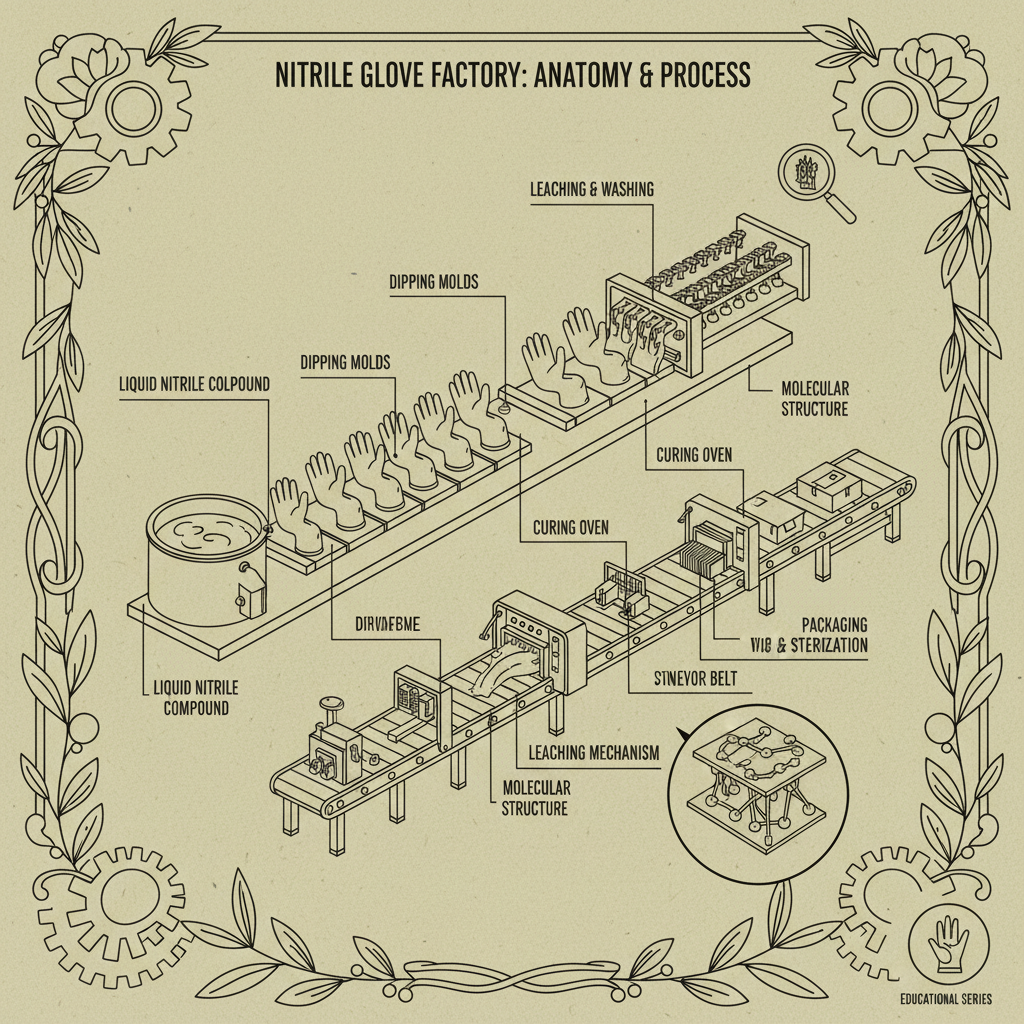
To be honest, everyone’s chasing higher puncture resistance. It’s the holy grail. But they often overlook comfort. A glove that can withstand a needle stick but feels like wearing a brick isn't going to get used. Have you noticed how many companies are trying to integrate anti-static properties? It's big in electronics manufacturing, naturally. And the demand for different colors keeps increasing – apparently, color-coding helps with contamination control in some environments. It's a bit strange, if you ask me.
One thing I've learned after all these years is that a seemingly simple design change can have a cascading effect on production costs and quality. Like, adding a textured fingertip for improved grip? Sounds easy, right? But it messes with the molding process, increases scrap rates, and can introduce weak points. Anyway, I think, a lot of these "improvements" are just marketing hype.
FAQS
Lead times really depend on the complexity of the order and our current workload, but generally, you're looking at 4-6 weeks for a new custom design. We need time for material sourcing, mold fabrication, and sample testing. Simple color changes can be done faster, maybe 2-3 weeks. But these are estimates, and can vary significantly depending on the time of year.
We hold ISO 9001 certification for our quality management system. Our medical-grade gloves are also certified to EN 455 standards. We also can help our clients obtain ASTM D6978 and REACH certification. It’s always best to check the specific product datasheet for the exact certifications applicable to your desired glove type.
The MOQ varies depending on the customization. For a simple color change, it might be as low as 50,000 pairs. But for a completely new design or mold, we typically require a minimum order of 200,000 pairs. It’s just a matter of economics; the tooling costs are substantial, and we need to spread them out over a sufficient volume.
We have a rigorous quality control process in place, starting with raw material inspection and continuing through every stage of production. We use statistical process control (SPC) to monitor key parameters and identify potential issues before they become major problems. We also conduct random sampling and testing throughout the process, and a final inspection before shipment.
Unfortunately, standard nitrile gloves are not biodegradable. Nitrile is a synthetic rubber and doesn't break down easily in the environment. We’re exploring alternative biodegradable materials, but they haven’t yet reached the same level of performance and cost-effectiveness as nitrile. It's a work in progress, though.
Typically, nitrile gloves have a shelf life of around 5 years when stored properly – that means in a cool, dry place, away from direct sunlight and ozone. Over time, the rubber can degrade, leading to a loss of elasticity and barrier properties. It's always a good idea to check the expiration date on the packaging.
Conclusion
So, that’s the story of nitrile gloves, at least from my perspective. It’s a surprisingly complex world, full of tradeoffs and challenges. There's a lot of hype and marketing fluff out there, but ultimately, the best gloves are the ones that get the job done safely and reliably. From material selection to production processes to real-world testing, every detail matters.
Ultimately, whether this thing works or not, the worker will know the moment he tightens the screw. And that’s all that really counts. If you're looking for a reliable nitrile gloves factory, get in touch. You can visit our website at www.hmdglove.com.


Daniel Anderson
If you are interested in our products, you can choose to leave your information here, and we will be in touch with you shortly.


